- Home
- Knee Joint Anatomy
- Muscles
Knee Muscles
Written By: Chloe Wilson, BSc(Hons) Physiotherapy
Reviewed by: KPE Medical Review Board
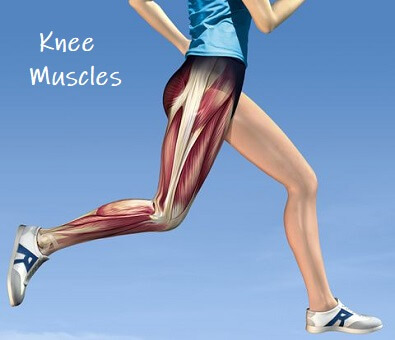
Our knee muscles are responsible for initiating and controlling movement of the knee and the kneecap.
They also work with the various buttock, thigh and calf muscles to help control the hip and foot.
When we think about the muscles of the knee, the ones that usually spring to mind are the quadriceps and the hamstrings but there are other muscles around the knee that are just as important.
How Do The Knee Muscles Work?
Knee muscles need to have both good strength and flexibility. Any tightness or weakness in the muscles around the knee makes you prone to a whole host of knee problems.
The hamstrings and quadriceps work together, one contracting (agonist) while the other relaxes (antagonist) to allow the knee to bend and straighten.
Here we look at each of the muscles of the knee, how they work, what can go wrong and how to prevent knee muscle injuries.
Muscles Are Around The Knee?
The main knee muscle groups are the:
- Quadriceps: four muscles found on the front of the thigh
- Hamstrings: three muscles found on the back of the thigh
- Calves: two muscles found on the back of the lower leg
- Glutes: three muscles that make up the buttocks
- Popliteus: small muscle found at the back of the knee
Let's have a look at each of the muscles around the knee, how they work, what activities they are important for, how they are injured and how to target them.
1. Quadriceps
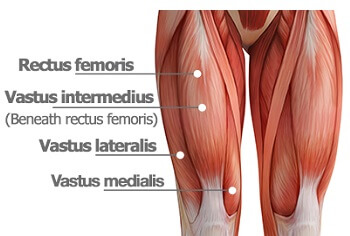
Location: The quads are found on the front of the thigh from the hip to the knee and are the main muscles above knee
Action: Their main action is to straighten the knee, but they also help bend the hip
Common Activities: Getting up from a chair, going upstairs, walking & running
Common Problems: tightness, weakness, quads strain, tendonitis, tendon rupture
How To Exercise: Quads Strengthening Exercises, Quads Stretches
The quadriceps are a group of four muscles found in the front of the thigh and over the knee. Their primary role is to straighten the leg.
The four muscles, vastus medialis, vastus intermedius, vastus lateralis and rectus femoris, each originate from the top of the femur (thigh bone).
They pass down the front of the thigh and then join together near the knee to form the quadriceps tendon.
The quads tendon flows around the patella (kneecap) before finally attaching to the tibial tuberosity at the front of the shin bone, by which time it is known as the patellar tendon.
Quads Function
- Straighten the leg
- Work most frequently in closed chain activity (meaning when the foot is fixed on the floor) e.g. getting up out of chair, walking upstairs
- Work with the glutes (bottom muscles) and hamstrings to supply the thrusting forces of walking, running and jumping.
- Controls the movement of the patella (kneecap)
2. Hamstrings
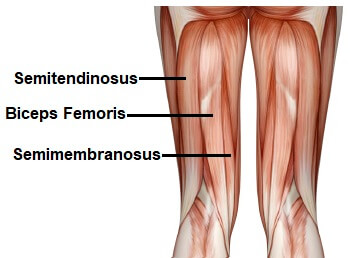
Location: The hamstrings are found on the back of the thigh from the hip to the knee
Action: Their main action is to bend the knee, but they also help to extend the hip
Common Activities: running, twisting the knee
Common Problems: tightness, weakness, muscle tear, tendonitis
How To Exercise: Hamstring Strengthening, Hamstring Stretches
The hamstrings are made up of three muscles in the back of the knee and thigh. They are the main knee flexor muscles and their primary role is to bend the knee.
Each of the three hamstrings muscles, semimembranosus, semitendinosus and biceps femoris, originate from the bottom of the pelvis, travel down the back of the thigh and attach to the back of the knee.
Hamstrings Function
- Flex (bend) and rotate the knee
- Help stabilise the knee by protecting the collateral and cruciate ligaments, especially when the knee twists
- Lift the leg off the ground when walking
- Provides the strength for propulsion e.g. running and jumping
3. Calf Muscles
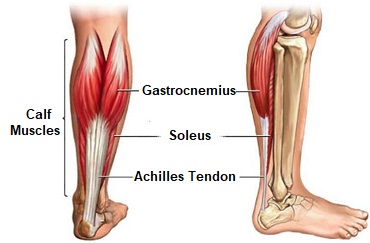
Just below the knee on the back of the shin are the calf muscles, soleus and gastrocnemius.
The calf muscles mainly control foot and ankle movement but the do also play a small part in knee movements alongside the other muscles behind knee.
Injuries such as calf tears and achilles tendonitis are common causes of calf pain.
Weakness in the calf muscles can often lead to knee pain too and cramp. Calf strengthening exercises and calf stretches can really help.
4. Gluteal Muscles
Another group of muscles not to be overlooked with knee problems is the glutes, or buttock muscles:
- Gluteus Maximus
- Gluteus Medius
- Gluteus Minimus
- Piriformis
The glutes play a very important role in the stability of the knee and in my experience, almost everyone suffering from ongoing knee pain has weak glutes and would benefit from glute strengthening exercises and in some cases glute stretches as swell.
5. Popliteus
Popliteus is one of the small muscles in the back of the knee.
It is often overlooked when thinking about knee muscles but popliteus plays an important role in helping the knee to twist, as well as aiding stability of the knee and helping to protect the lateral meniscus.
Can Muscle Problems Cause Pain?
Yes, problems in the knee muscles do cause pain! Tightness or weakness in the quadriceps, hamstrings and other muscles around the knee are often part of the cause of knee pain.
If there is muscle imbalance, it changes the way the forces go through the knee, and puts extra pressure on certain areas, leading to knee pain.
Knee muscles are also often injured. It may be that they are overstretched and tear, or that they are overused and become inflamed.
Common injuries associated with the knee muscles include:
- Jumpers Knee
- Quads Strain
- Quads Rupture
- Quadriceps Tendonitis
- Calf Strain
- Iliotibial Band Syndrome
- Knee Bursitis
- Hamstring Tendonitis
- Hamstring Strain
How To Strengthen Knee Muscles
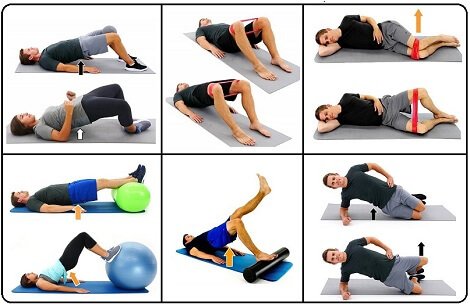
Strengthening the muscles around the knee is one of the best ways of preventing and treating knee pain.
There are loads of great exercises that help to strengthen the various knee muscles.
Some target one muscle group at a time, others work different groups together.
People often start with open chain exercises, where the foot is free rather than fixed and progress to close chain exercises where the feet are fixed to the floor and thus there is weight going through the leg as you exercise.
You can find a whole range of strengthening exercises for the knee muscles, whatever level you are at, in the knee strengthening exercises section.
How To Stretch The Knee Muscles
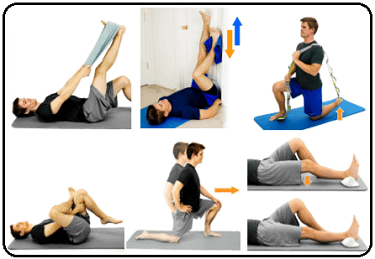
Tightness in the muscles around the knee changes how the knee moves and how the forces go through the joint which can lead to a whole host of knee problems.
Tightness in the muscles behind knee can limit knee extension and tightness in the muscles above knee can limit knee flexion.
Any tightness in the knee muscles can also affect how the knee joint functions and how the knee cap moves around which can lead to pain.
There is much debate on the best way to stretch muscles and in the knee stretches section, you can find out everything you need to know about the best way to stretch including how to check if your knee muscle are tight and how to stretch each of the muscles around the knee.
Knee Muscle Locations
Quadriceps
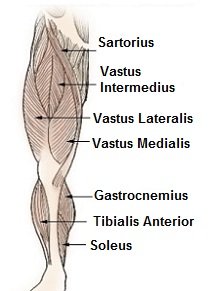
- Rectus Femoris: is the most superficial (closest to the surface), central muscle of thigh. It helps bend the knee and straighten the hip
- Vastus Intermedius: lies deep to rectus femoris. It runs down the middle of the thigh
- Vastus Medialis: wraps
around femur anteromedially (front and inside part of the thigh). The
main bulk of this knee muscle is in bottom part of thigh near the
kneecap where it is known as VMO (Vastus Medialis Oblique)
- Vastus Lateralis: wraps itself round the femur anterolaterally (front and outside part of the leg). The main bulk of this knee muscle is at the top of the thigh
Hamstrings
- Semimembranosus: is the most superficial (closest to the surface), found on the medial (inner) side of the back of the thigh
- Semitendinosus: is found underneath semimembranosus
- Biceps Femoris: is found on the lateral (outer) side of the back of the thigh. Attaches to the fibula and outside of the tibia
Knee Muscles Summary
The knee muscles work together to produce movement, strength and control at the knee joint.
The four main groups of muscles of the knee are the quadriceps, on the front of the thigh, and the hamstrings on the back of the thigh, the calves on the back of the shin and the glutes, in the buttocks.
All these muscles work together, alongside the hip muscles to provide smooth, controlled, strong and stable motion in the leg.
Overstretching or repetitive overloading can lead to damage in the knee muscles resulting in pain, inflammation and weakness.
You may be interested in the following articles:
- Muscles Of The Hip
- Knee Strengthening Exercises
- Knee Stretches
- Common Causes Of Knee Pain
- Knee Range Of Motion
Related Articles
Last Updated: September 17th, 2025
Next Review Due: September 17th 2027

Check Out Our Book!

Visitor Comments
“This is one of the best self-help & info sites of any medical condition I've ever seen. Excellent work.” Amy, UK
"Your site and exercises have been a lifesaver! The explanations are so clear. Thanks for your help and excellent work." Claire, US
"I LOVE your website. Out of all the others, yours is so informational and easy to read." Michelle, US
"This is the best site dealing with knee problems that I have come
across. I will be putting the stretches and exercises into practise. Thank you!"
Margaret, S. Africa
"Brilliant website - highly recommended! And as nurse (25yrs exp) its written expertly and is very explanatory and easy to understand. Thank you!" Jo, UK
The material on this website is intended for educational information purposes only. It should not substitute or delay medical advice, diagnosis or treatment.
Knee-Pain-Explained.com is a trading name of Wilson Health Ltd. All rights reserved. Terms & Conditions apply
© knee-pain-explained.com 2010-2025. Last updated 4th December 2025
Contact Us About Us Blog Privacy Policy Advertising Policy Sitemap
