- Home
- Knee Exercise Guide
- Knee Stretches
- ITB Stretches
Iliotibial Band Stretches
Written By: Chloe Wilson, BSc(Hons) Physiotherapy
Reviewed by: KPE Medical Review Board
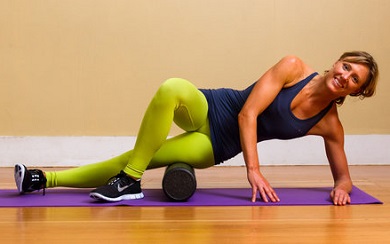
Iliotibial band stretches are a great way to reduce knee, hip and back pain and the symptoms of iliotibial band syndrome.
Here, we share our 6 favourite ITB band stretches, with easy to follow instructions and images to help you beat ITB pain.
The Iliotibial Band (ITB) is a thick band of fibrous tissue that runs down the outside of your leg from your pelvis to your knee. Some of the buttock and hip muscles attach to it and the ITB co-ordinates how these muscles work and stabilises the knee.
Why Are ITB Stretches Important?
Tightness of the ITB can make subtle changes to the way the knee moves resulting in knee pain, particularly in runners.
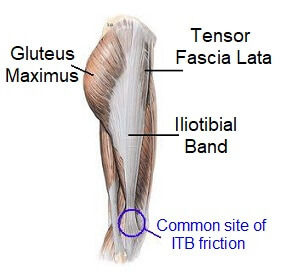
It can lead to patella maltracking, where the kneecap doesn’t glide properly as the knee moves which can lead to a whole range of knee and kneecap problems.
Tightness in the ITB can also irritate the hip and knee bursa, small fluid filled sacs that provide cushioning between the Iliotibial Band and the bones underneath, causing inflammation and pain.
The most common knee problems that iliotibial band stretches are particularly useful for are:
- Iliotibial Band Syndrome: Common in long distance runners. Causes pain on the outer side of the knee and thigh.
- Bursitis: Inflammation of either the trochanteric bursa on the outer side of the hip or the iliotibial bursa on the outer side of the knee
- Runners Knee: damage to the cartilage from excessive friction through the patella
- Patellar Dislocation: people with a tight ITB are at greater risk of dislocating their kneecap due to the abnormal pull on the bone
- Patella Alta: where the kneecap sits slightly out of position
ITB tightness can contribute to a number of different knee problems so iliotibial band stretches are often an important part of rehab, particularly for runners.
How To Do Iliotibial Band Stretches
Stretching the ITB is slightly different from stretching other muscles, as the ITB is a thick, fibrous band rather than an elastic muscle.
Here you will find six different iliotibial band stretches to choose from but you only need to do one or two – choose the ones that work best for you. To be most effective, hold each stretch for 30 seconds and repeat 3 times.
The description/pictures show you how to stretch your right ITB but can easily be reversed to stretch the left side. Let's start with some of our favourite standing iliotibial band stretches.
Standing IT Band Stretches
Standing iliotibial band stretches can be done almost anywhere making them particularly useful and a great place to start.
1. Basic ITB Stretch
This is my favourite of all the iliotibial band stretches. It's really easy to do and is very effective.
- Stand upright and cross your right leg behind your left
- Lean
slightly forwards and to your left side until you feel the IT band stretch on the
outside of your right leg. Lean on a chair/wall if needed. Hold for
30 secs
- Repeat 3 times, 2x daily, or before and after exercise
Progression: Place your hands on your head whilst doing this to increase the stretch
2. Wall ITB Stretch
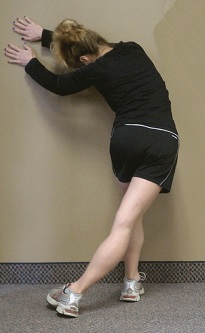
- Start as with the first exercise but cross
your right leg further over behind you to the left. Place your hands on
your head or lean on a wall for support ensuring your hands are above
your head as this increases the stretch
- Lean to the left whilst gently gliding your hips to the right until you feel the it band stretching. Hold for 30 secs
- Repeat 3 times, 2x daily, or before and after exercise
Top Tip: People often find that they feel more balanced and in control with IT band stretches when they use the wall for balance
ITB Stretches Lying Down
Some people prefer to do iliotibial band stretches lying down as they feel more stable, so here are three to choose from.
1. Side Lying ITB Stretch
- Lie on your left side at the edge of a bed/table with your bottom knee bent
- Move
your top (right) leg backwards so it hangs down over the edge of the
bed. Gradually try and let the right leg drop down more to increase the strength of the IT band stretch. Hold for 30 secs
- Repeat 3x, 2x daily
Progression: You can increase the intensity of iliobtibial band stretches by using a foam roller. Lie as shown with the roller underneath the area of pain (at a right angle to your body) and as you hold this stretch, gently roll backwards and forwards on the roller.
2. Belt IT Band Stretch
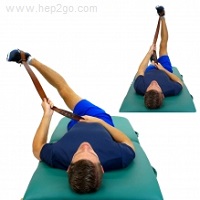
- Lie on your back with a belt looped around your right foot
- Bring your right leg straight up and across your body until you feel a stretch on your outer thigh. Hold for 30 secs
- Repeat 3x, 2x daily
Progression: Increase this iliotibial band stretch by turning your foot inwards as you do the exercise
Top Tip: Keep your hips flat on the bed/table rather than letting them twist up
3. Foam Roller ITB Stretch
Foam rollers are a really great tool for iliotibial band stretches. The pressure through them really targets the tough ITB and helps to stretch it out - it's like giving yourself a sports massage!
- Lie on your left side with a foam roller underneath your thigh and your top leg bent up out of the way
- Using your arms and top leg, roll up and down on the roller so it down your outer thigh from the hip to the knee
- Do this for around 3 minutes, 2x daily, or before and after exercise
Assisted Iliotibial Band Stretches
If you find it hard to do iliotibial band stretches effectively, getting someone to help can
make a big difference. They may be able to help you stretch your ITB
further than you can on your own.
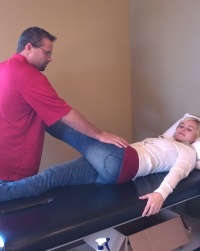
- Lie on your back with your legs straight
- Assistant
brings your right leg up and across your body until you feel the it band stretching on the outer side of your thigh. Hold for 30 secs
- Repeat 3x, 2x daily
Progression: Increase the stretch through your iliotibial band by turning your foot inwards as you do the exercise
Top Tip: Get someone to put gently pressure through your hips to keep them still
What Else Can Help?
Iliotibial band tightness is an extremely common cause of:
It is often accompanied by buttock tightness and weakness so it can really help to do glute stretches and knee strengthening exercises alongside your iliotibial band stretches.
For top tips on getting the best out of iliotibial band stretches, including quick tests to tell if your muscles are tight and how to get the best results for the least effort, visit the knee stretches overview.
Often, there will be tightness in more than one muscle and muscle weakness and tightness often go hand in hand. So it is important to be strengthening and stretching out any other areas too:
Combining stretching and strengthening exercises will help to make sure you are getting maximum benefit from these iliotibial band stretches for your knee.
You may also be interested in the following articles:
- Front Knee Pain
- Pain Behind The Knee
- Sharp Knee Pain
- Knee Pain Running
- Knee Pain With Squats
- Knee Pain At Night
- How To Reduce Knee Swelling
- Home Remedies For Knee Pain
Page Last Updated: 09/02/23
Next Review Due: 09/02/25
Related Articles


References
1. Scandanavian Journal of Medicine and Science in Sports: Iliotibial band syndrome: an examination of the evidence behind a number of treatment options. Falvey E, Clark R, Franklyn-Miller A, Bryant A, Briggs C, McCrory P. August 2010
2. Archives of Physical Medicine & Rehabilitation: Quantitative analysis of the relative effectiveness of 3 iliotibial band stretches. Fredericson M, White J, Macmahon J, Andriacchi T. May 2002
3. Journal of Sports Medicine: A Review of Treatments for Iliotibial Band Syndrome in the Athletic Population. Beals C, Flanigan D. October 2013

Check Out Our Book!

Visitor Comments
“This is one of the best self-help & info sites of any medical condition I've ever seen. Excellent work.” Amy, UK
"Your site and exercises have been a lifesaver! The explanations are so clear. Thanks for your help and excellent work." Claire, US
"I LOVE your website. Out of all the others, yours is so informational and easy to read." Michelle, US
"This is the best site dealing with knee problems that I have come
across. I will be putting the stretches and exercises into practise. Thank you!"
Margaret, S. Africa
"Brilliant website - highly recommended! And as nurse (25yrs exp) its written expertly and is very explanatory and easy to understand. Thank you!" Jo, UK
The material on this website is intended for educational information purposes only. It should not substitute or delay medical advice, diagnosis or treatment.
Knee-Pain-Explained.com is a trading name of Wilson Health Ltd. All rights reserved. Terms & Conditions apply
© knee-pain-explained.com 2010-2026. Last updated 6th January 2026
Contact Us About Us Blog Privacy Policy Advertising Policy Sitemap
